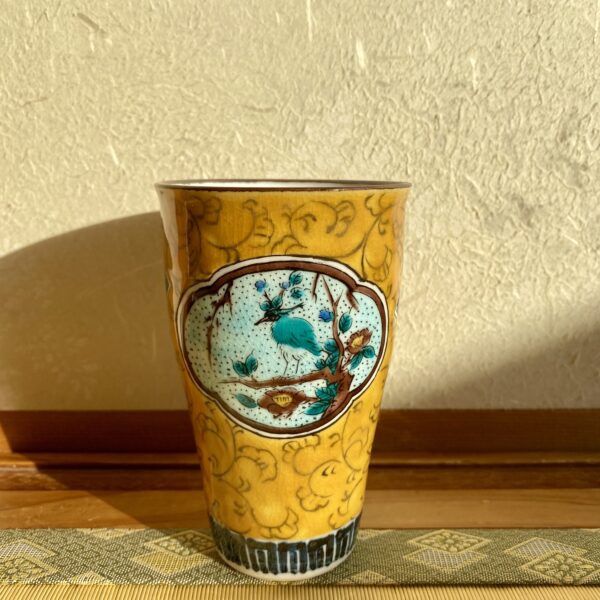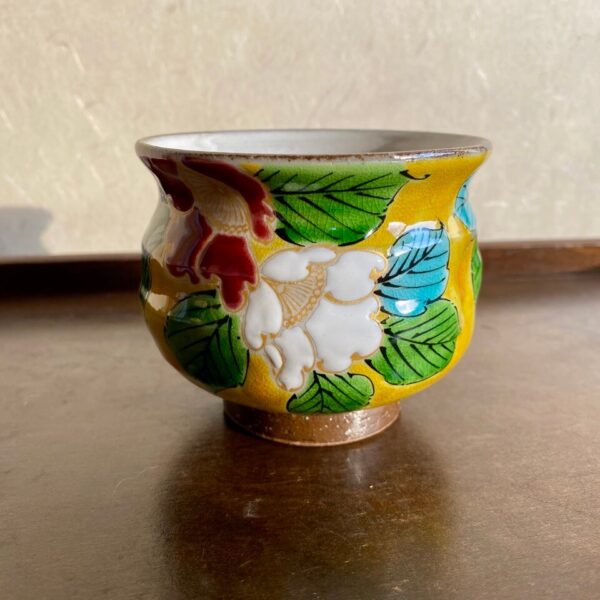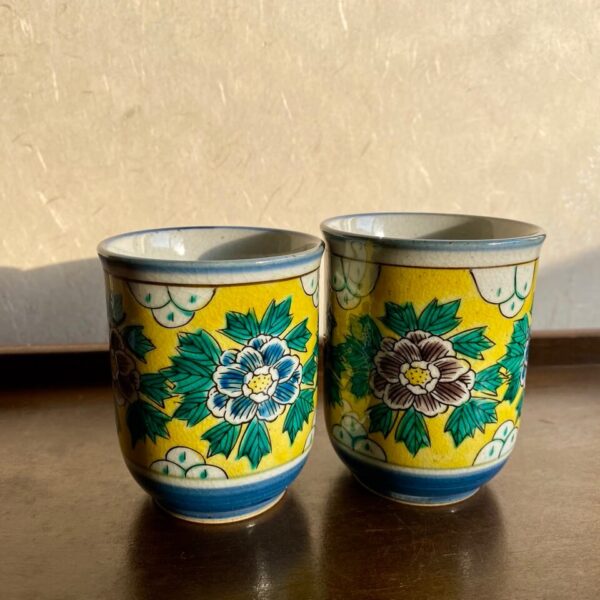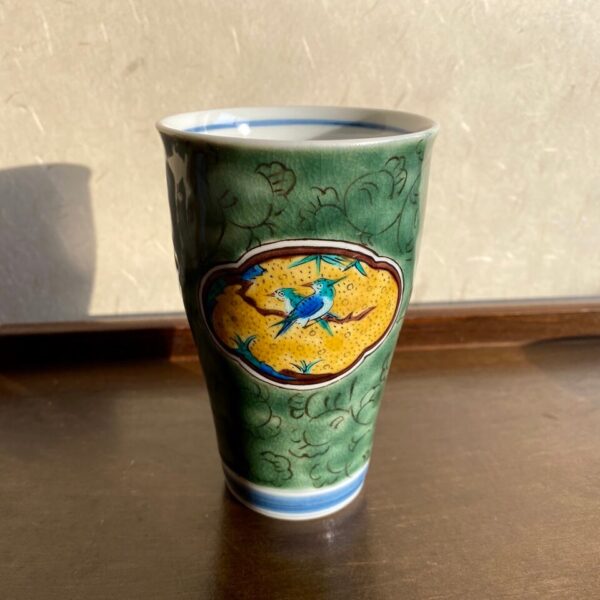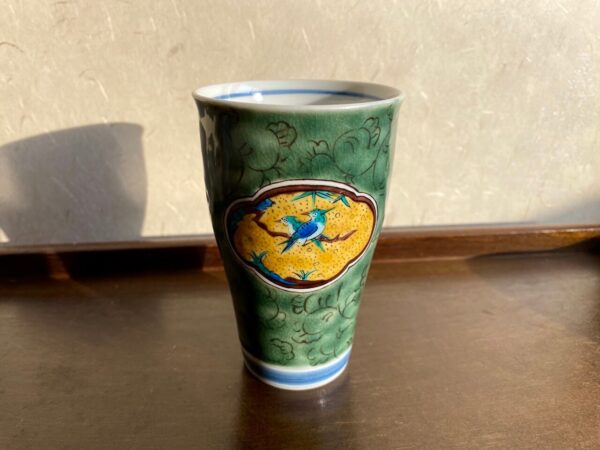
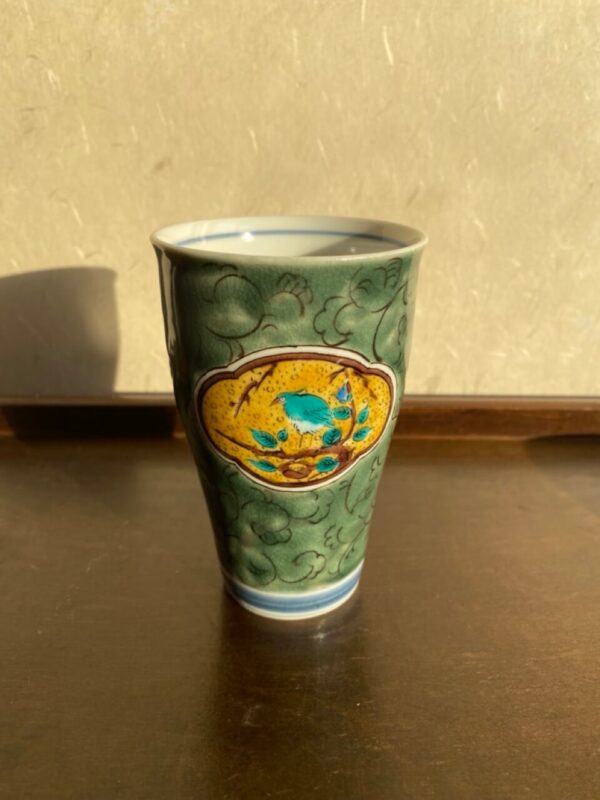
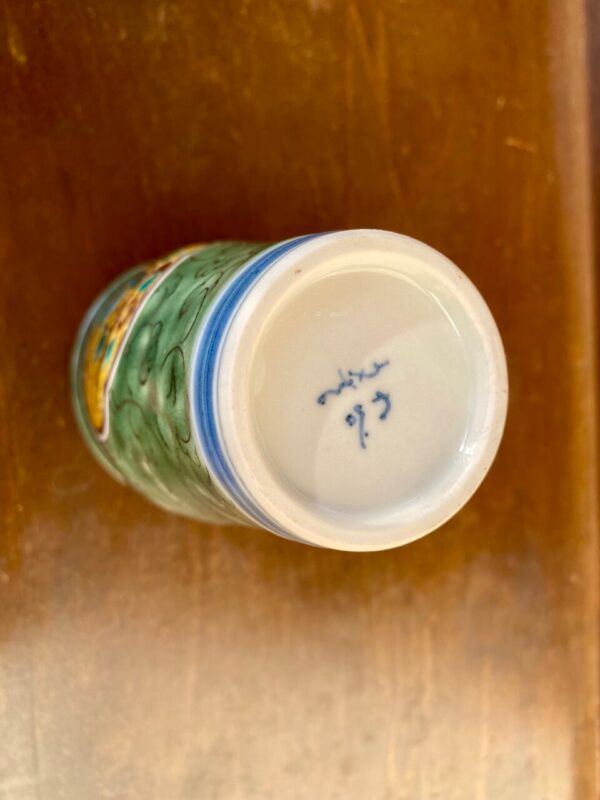
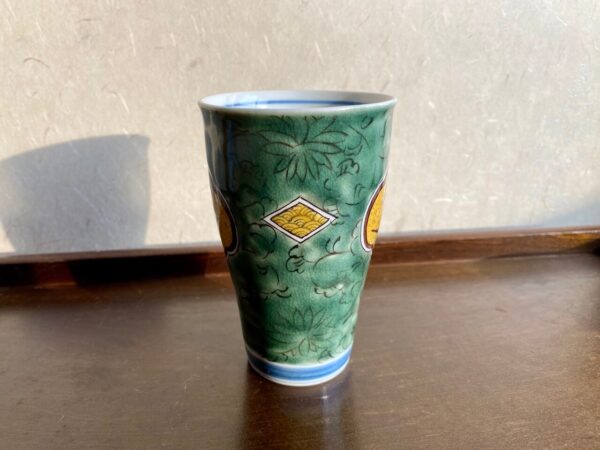
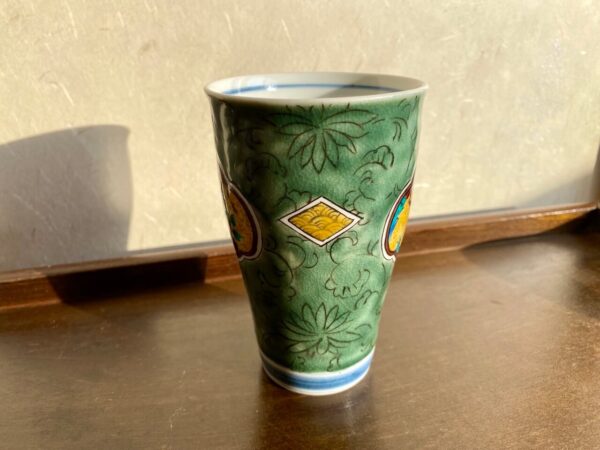



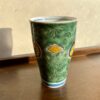
This Kutani cup is crafted at Bunkichi Kiln (文吉窯), a small traditional workshop in Nomi City, Ishikawa.
Unlike most Kutani kilns where forming and painting are done separately, Bunkichi Kiln completes every stage themselves — forming the clay, shaping the cup, drawing the outlines, and painting the colors, all by hand. Nowadays, it’s extra luxury that not just painting but also lining is done by hands.
The design follows the Aode Kokutani (青手古九谷) style — an early Kutani palette from the 17th century known for its deep green, warm yellow, and soft purples painted over strong black outlines.
It is one of the most classical and expressive Kutani styles, and Bunkichi Kiln interprets it with characteristic warmth and layered brushwork.
This cup has a simple, balanced form, with a gentle, tactile surface where pigments naturally accumulate through repeated hand-painting.
You can feel the weight, texture, and individuality of full handcraft in your hands.
Visiting Bunkichi Kiln
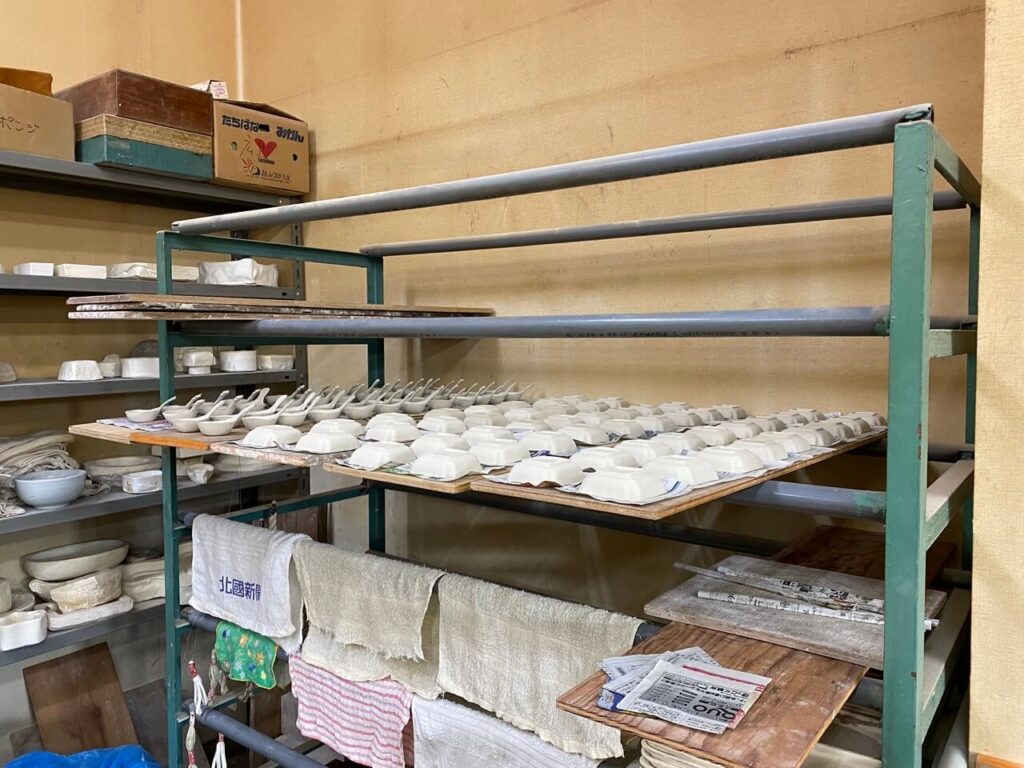
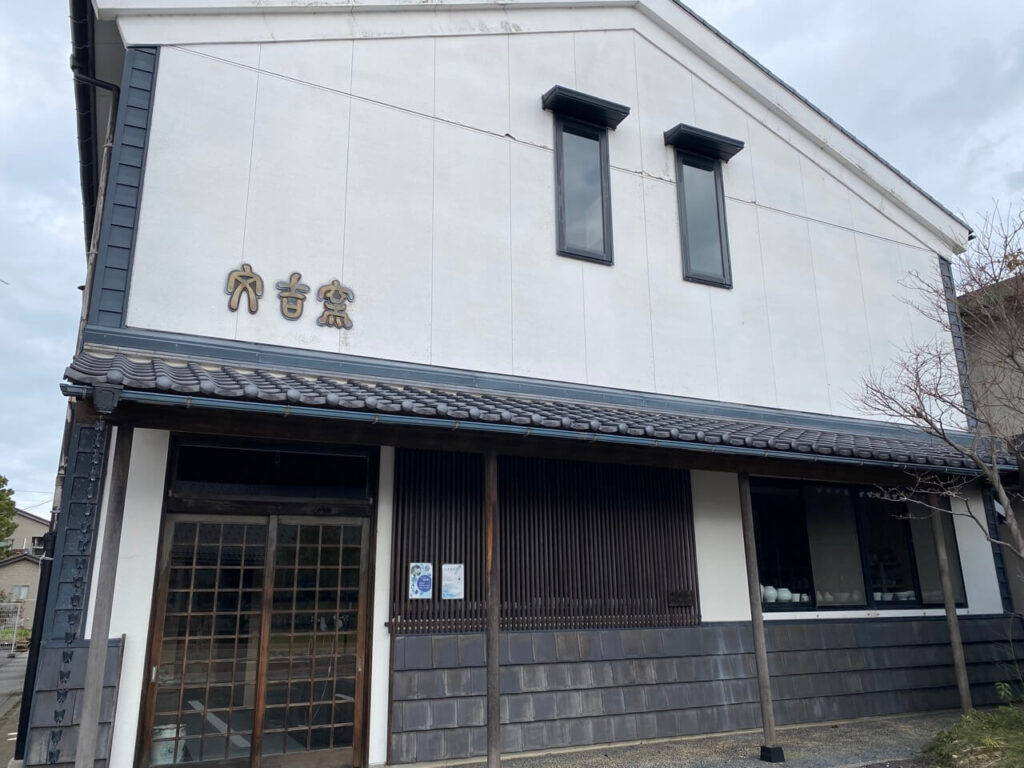
Bunkichi Kiln was founded in the Meiji period by the first-generation Higashi Bunkichi, a disciple of Saida Dōkai — one of the key masters of Kutani.
Today, the kiln continues as a rare full-process Kutani workshop, producing everything on site.
When I visited, I asked the master’s wife why her husband insists on doing every step himself, even though Kutani is usually divided between forming and painting.
She simply said:
“He just wanted to do everything alone by himself.”
Price Note
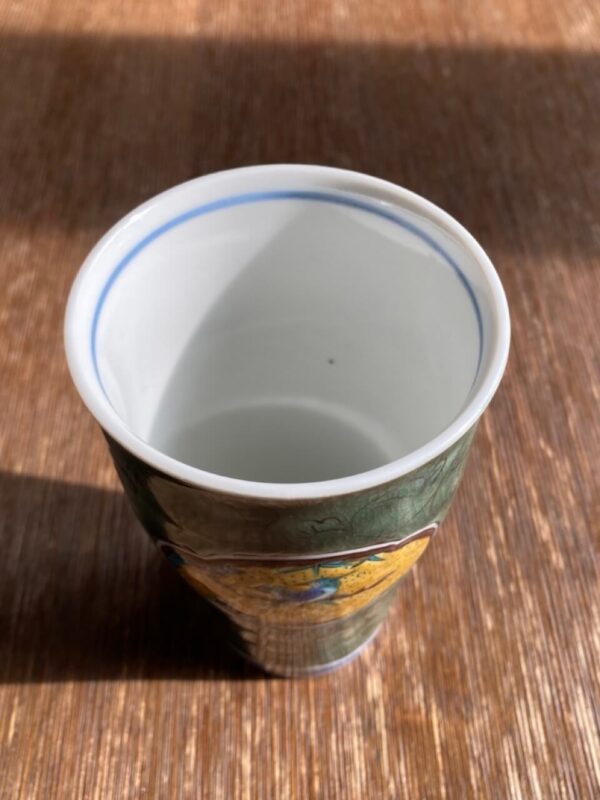
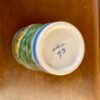
This cup is offered at a special outlet price because it has a small firing stain inside.
It does not affect use or safety, and the stain is shown clearly in the photos.
Features
-
Fully handcrafted at Bunkichi Kiln — clay forming, outlining, and painting done entirely by hand
-
Classic Aode Kokutani (青手古九谷) palette
-
Hand-drawn outlines and traditional overglaze painting
-
Natural brush expression and subtle pigment texture
-
Rare full-process Kutani craftsmanship
-
Outlet pricing due to a small firing stain (shown in photos)
About Kutani Ware
Kutani ware began in the 17th century in Kaga, Ishikawa.
Among its early styles, Aode Kokutani is especially valued for its strong outlines and vivid color combinations.
Modern Kutani often separates forming and painting into different workshops, which makes fully integrated kilns like Bunkichi Kiln extremely rare today.